
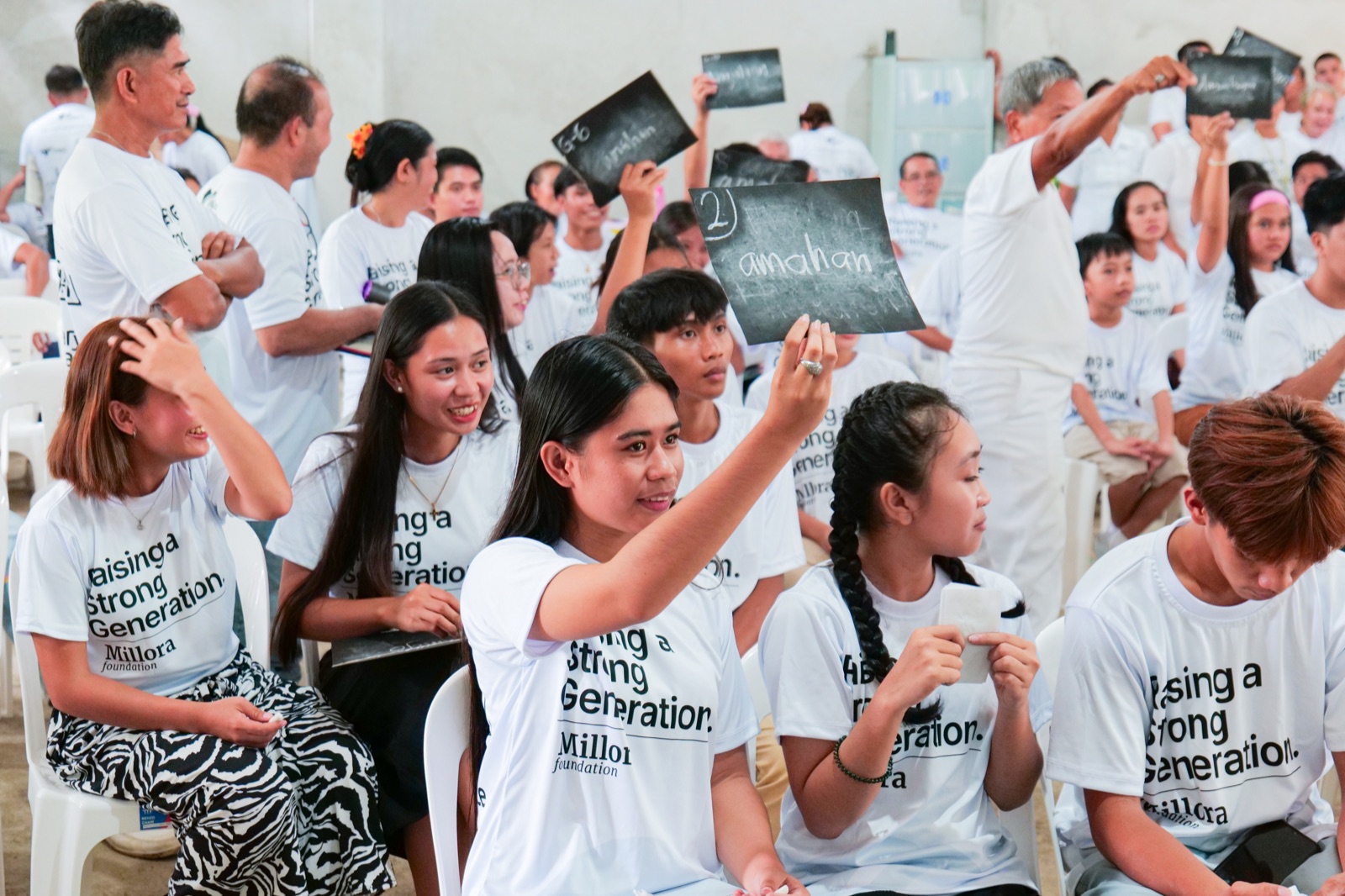
Why I designed Millora's approach around choice, contribution, and independence
Help should leave someone with more say over their life. That belief shapes how I think about Millora Foundation. We want people to be able to contribute to their communities, practice independence, and hold authority over their own lives. We do not want the foundation to become their only way forward.
There is a hard question inside that goal. When does help create room for someone to grow? And when does it start to feel like someone else is taking charge?
What is psychological reactance?
Psychological reactance is the urge to push back when our freedom to choose feels at risk. Help can feel like control when it takes decisions out of our hands. A person may resist a helper even while they need or value the help.
A review of reactance research describes it as a motivation to regain freedom after that freedom feels lost or threatened. It can involve feelings, thoughts, and actions aimed at restoring choice (Steindl et al., 2015).
That is one possible reason for friction. The review also identifies open questions. Reactance gives us a useful framework, not a way to read someone's mind, diagnose them, or judge their character.
Good intent does not decide how support feels. A person can value the help and still resist the loss of choice that seems to come with it.
How is reactance different from entitlement?
Reactance is resistance to a loss of choice. By entitlement here, I mean expecting someone to keep giving past the agreed limit just because they have the means.
They can look similar from the outside, but they can happen separately. One person may feel controlled and pull away. Another may expect support to keep arriving. Neither is proof of the other.
Not being able to give back right away proves neither. A person may need help for a long time. When someone is in a hard season, needing support does not reveal their character. It reveals their circumstances.
I have seen the entitlement pattern in my own working life, though. While managing corporations in the Philippines, I set clear boundaries and had signed agreements in place. Even then, some people expected help to continue because I had the resources.
That is what I saw in those cases. It is not a statement about Filipino people or about everyone who receives help. The lesson was narrower: clear terms on paper do not always settle what people expect from you.
What happens when people can choose how to use support?
Choice can be part of the help itself. One useful example comes from a trial of cash aid by the NGO GiveDirectly in rural Kenya. The aid came with no spending rules.
Recipients could decide how to use the money. The study found gains in household consumption and psychological well-being nine months after transfers began. Monthly payments were more likely to improve food security. Lump-sum payments were more likely to be used for durable goods (Haushofer & Shapiro, 2016).
The study does not prove that cash is always best. Choice does not remove every risk. The trial covered one NGO program in one setting and reported short-term results. Still, it warns us not to assume that every household needs the same form or timing of support.
What can a path toward independence include?
Independence may require more than one resource. A short-term program can join choice with skills, support, and a practical way to earn.
Six trials studied a BRAC-style Graduation program. They included 10,495 people in Ethiopia, Ghana, Honduras, India, Pakistan, and Peru. Each person chose a productive asset from a list. The package also included training, coaching, and temporary cash support. Most sites offered savings and health services too. One year after the program ended, eight of ten outcome groups still showed gains. The estimated benefits were higher than the costs in five of the six sites (Banerjee et al., 2015).
That is closer to the design question I care about. Still, the study tested the full package. It did not show which part caused the results. It also did not test reactance or Millora.
Why does autonomy matter when one person helps another?
The reason behind help can shape how it feels on both sides. Four studies compared voluntary reasons for helping with more controlled reasons. Voluntary help was linked with greater need satisfaction and benefits for helpers and recipients (Weinstein & Ryan, 2010).
These were not foundation reviews. They do support a useful point. Freely choosing to help differs from acting under pressure, duty, or image concerns. The person receiving help may feel that difference too.
How does Millora design for independence?
Millora is built around one idea: help should give a person more room to choose and take part. It should not make the foundation their lasting source of direction.
This is the philosophy I designed around, not a measured outcome I can claim yet. In practice, it changes our questions:
- Instead of deciding for the person, where can we offer a real choice about the next step?
- Instead of leaving support open-ended and unstated, can we explain honestly what it covers and where it ends?
- Instead of measuring only what we gave, what skill or room to act does the support leave behind?
- Instead of demanding repayment, can we leave a fair way to take part when the person's timing and ability allow?
These are design questions, not a list of current program rules. A person might share a skill, support a peer, help with a local effort, or choose their own next step. What fits depends on their needs and ability.
Giving back to the community does not have to mean paying back the foundation. It should never become a test of deservingness, and essential support should not be withheld to teach a lesson. Some people will need ongoing care. That does not make them a failure.
The goal is agency, not a performance of gratitude.
The idea of practicing agency also connects with self-efficacy. Bandura's foundational paper linked belief in one's ability with action and behavior change (Bandura, 1977). That does not prove a foundation program builds independence. It supports a practical question: does the person get a real chance to decide, act, and learn?
Participation is not automatically empowerment. A World Bank review of participatory development found that context and local power matter. So do collective action, the role of the state, monitoring, and learning. Many reviewed World Bank projects paid too little attention to context and effective monitoring and evaluation (Mansuri & Rao, 2013).
That is why giving someone a role is not enough. The role needs real choice, appropriate safeguards, and a way to learn from what happens.
The same idea appears in leadership. Good founder delegation is not just the transfer of tasks. It gives someone clear authority, enough support, and sound checkpoints. Psychological safety also depends on people knowing they can raise concerns without guessing what will happen next.
In each case, clarity is part of respect. Authority is not real if the other person cannot safely use it.
What does this mean for people who give help?
Ask what help is wanted before deciding what help should look like.
Be clear about what you can offer and where it ends. Leave room for the other person to choose the next step. Agree on duties before support begins. Do not confuse a boundary with a verdict on someone's worth.
For me, four questions provide a useful check:
- Did we ask what the person actually wants?
- Did we preserve a meaningful choice?
- Did we explain the scope of support honestly?
- Did we leave a fair path for the person to take part when they are able?
As a giver, you can care and still have limits. Having resources does not mean you can meet every need. As a recipient, you can need support and still have a voice.
For Millora, the question must reach beyond what we give. What room does our help leave for people to act, choose, and take part?
Help, done well, does not make people smaller. It gives them back the pen.
Related reading across Mherie Vic Ventures
- Psychological Safety: Speaking Up Without Guesswork
- Founder Delegation: Authority, Capacity and Checkpoints
- Self-Efficacy: The Quiet Belief That Builds Careers
- How to Find a Mentor and Review the Fit
- Branding for Nonprofits: Mission-Driven Identity Design
- Creative Philanthropy: Redesigning SINAG Foundation
- What Consent-First Really Means for Us
Key takeaways
- Psychological reactance is resistance to a perceived loss of autonomy, not ingratitude.
- Entitlement and reactance are different. An inability to contribute right away proves neither.
- Research on aid shows that recipient choice, temporary support, skills, and context all matter. No single model fits every person or community.
- Millora's approach keeps honest limits while helping people practice choice and hold authority over their own lives.
- Giving back should be a fair chance to take part, not an immediate debt or a test of worth.
Frequently asked questions
References
Bandura, A. (1977). Self-efficacy: Toward a unifying theory of behavioral change. Psychological Review, 84(2), 191-215. PubMed.
Banerjee, A. V., Duflo, E., Goldberg, N., Karlan, D., Osei, R., Pariente, W., Shapiro, J., Thuysbaert, B., & Udry, C. (2015). A multifaceted program causes lasting progress for the very poor: Evidence from six countries. Science, 348(6236), 1260799. MIT-hosted paper.
Haushofer, J., & Shapiro, J. (2016). The short-term impact of unconditional cash transfers to the poor: Experimental evidence from Kenya. The Quarterly Journal of Economics, 131(4), 1973-2042. Author-hosted paper.
Mansuri, G., & Rao, V. (2013). Localizing development: Does participation work? World Bank. World Bank.
Steindl, C., Jonas, E., Sittenthaler, S., Traut-Mattausch, E., & Greenberg, J. (2015). Understanding psychological reactance: New developments and findings. Zeitschrift fur Psychologie, 223(4), 205-214. PubMed Central.
Weinstein, N., & Ryan, R. M. (2010). When helping helps: Autonomous motivation for prosocial behavior and its influence on well-being for the helper and recipient. Journal of Personality and Social Psychology, 98(2), 222-244. PubMed.
This article is for informational and educational purposes only and does not constitute financial, legal, tax, medical, or professional advice. Individual results vary.